

Team Debate
What's Team Debate?
Team Debate is where you and your team of three debate against another team of three. You aren't just talking; you’re thinking of arguments and rebuttals, while trying to out think the other side in 3 rounds. Judges give you the motion (the prompt) and assign which side you’re on, affirmative or negative.
What to Bring
-
Your team
-
Water bottle
-
Electronics (as of January 2026 no longer allowed)
-
Pen or pencil
-
Paper or notecards
-
Name tag
-
Good teamwork
What to Note
-
Each round starts with 15 minutes to research and prepare. Once time's up, no Googling information, it’s only you and your notes. Each speaker gets 4 minutes to talk. If you go over or under 4 minutes, the judges deduct you points, so try to keep it around 3 1/2 to 4 minutes.
-
Judges look at everything: clear points, strong rebuttals, confidence, organization, eye contact, and not just reading off the paper. The more persuasive and respectful you are, the more points you receive. Do you want to see the full rubric?
-
In WSC, you don’t “lose,” you get lollipopped. Since 2015, they been trying to become more positive. It isn't a loss, it's candy where you learn and improve.
What's Happening?
-
Judge checks your team's name tag letters and assigns sides. Motion gets read. 15 minutes research time starts.
-
1st Affirmative Speaker (4 min) – lays out the motion, sets the tone, makes it clear
-
1st Negative Speaker (4 min) – argues back and sets their own terms
-
Affirmative gets 1 min to prepare for rebuttals.
-
2nd Affirmative Speaker (4 min) – says rebuttals, builds the case stronger
-
Negative gets 1 min to prepare.
-
2nd Negative Speaker (4 min) – hits back at the affirmative team, tries to flip their points.
-
Affirmative gets 1 min.
-
3rd Affirmative Speaker (4 min) – breaks down the negative team's arguments, closes with power.
-
Negative gets 1 min.
-
3rd Negative Speaker (4 min) – same thing, last word before judge finishes judging.
-
Judge asks each team give 1 min of feedback to the other side (what you liked, how to improve).
-
Judge announces who won, affirmative or negative. Teams move to their next room, map in hand.
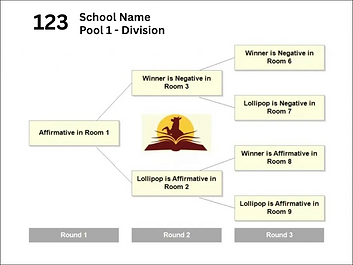
→
example of WSC debate map
Roles and Responsibilities
Affirmative:
-
1st Affirmative Speaker – “The Opener”
The team's introductory voice. Sets the motion and makes that first impression on the judge. If the opener messes up, the rest of the team has to work twice as hard.
-
2nd Affirmative Speaker – “The Engine”
The backbone of the team. Says important facts, keeps the argument moving, and starts rebuttaling the negative side. This speaker makes sure the team doesn’t stall.
-
3rd Affirmative Speaker – “The Closer”
The heavy hitter. Final word for the team, dismantles the negative side's points, and lets the judge know why their points are right. Needs confidence and smooth delivery.
Negative:
-
1st Negative Speaker – “The Counter”
Comes up right after the opener and sets the team's terms. Challenges the affirmative side's framing and makes sure the judge sees there’s another way to read the motion.
-
2nd Negative Speaker – “The Bruiser”
Comes in with rebuttals, facts, and strong arguments. Their job is to look for mistakes in the affirmative side's case and reinforce their team's side.
-
3rd Negative Speaker – “The Finisher”
The team's last word. Shuts down affirmative side's case, picks apart their logic, and ties up all their points.
Tips
-
Never use fallacies and always use facts and logic. No weak reasoning or shady tricks.
-
Keep your notes short and don’t bury your face in paper; use bullets, keep eye contact, and let the judge know the confidence.
-
Share resources with your team before rounds, trade facts, and stay together.
-
Write rebuttals by jotting down what the other team says while they say it, not after.
-
Predict the other side by thinking ahead about what they might argue.
-
Hooks matter, so start with a quote or a story that grabs the judge’s attention.
-
Twist the motion if it feels too broad and find the angle that favors you.
-
If you feel nervous, take a breath, slow down, and talk with confidence. If you mess up, move on with your next words.